
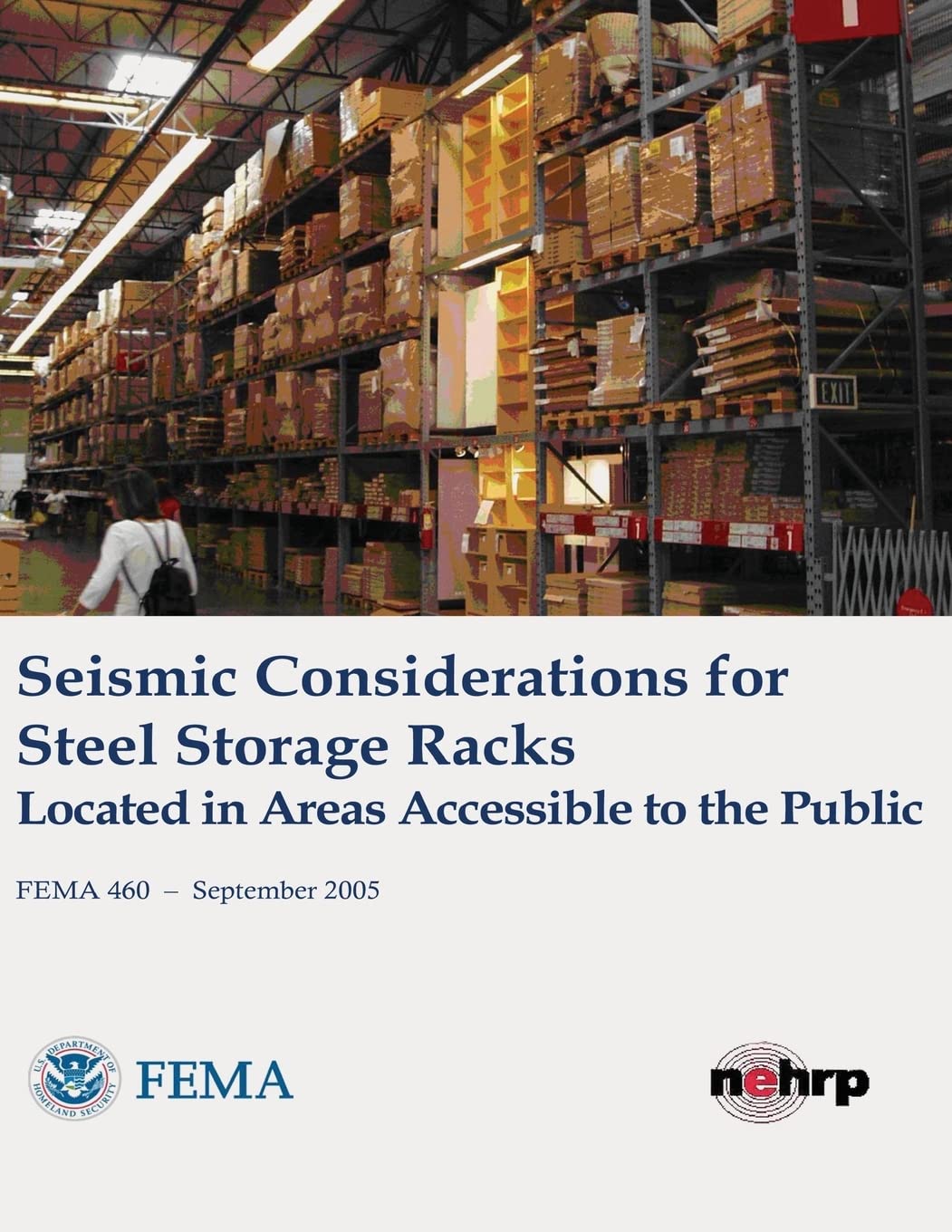
Seismic Considerations for Steel Storage Racks Located in Areas Accessible to the Public (FEMA 460 / September 2005)
Product details
| Management number | 231630764 | Release Date | 2026/06/18 | List Price | US$10.00 | Model Number | 231630764 | ||
|---|---|---|---|---|---|---|---|---|---|
| Category | |||||||||
During the past few decades, the number of large public warehouse stores (often referred to as big-box stores) across the nation has grown significantly, changing both consumer buying habits and the public’s risk of injury during earthquakes. During an earthquake, occupant safety in a big-box store depends on both the structural performance of the building and on the performance of the storage racks and their contents. Earthquake ground motions can cause storage racks to collapse or overturn if they are not properly designed, installed, maintained, and loaded. In addition, goods stored on the racks may spill or topple off. Both occurrences pose a life-safety risk to the exposed shopping public. The immediate stimulus for the project that resulted in this report was a 2003 request from the State of Washington to the Federal Emergency Management Agency (FEMA) for guidance concerning the life-safety risk posed by the storage racks in publicly accessible areas of retail stores, especially the risk of rack collapse of loss of stored goods during an earthquake. FEMA asked the Building Seismic Safety Council (BSSC) to develop the requested guidance. To do so, the BSSC established a Rack Project Task Group composed of practicing engineers, storage rack designers, researchers, representatives of the Rack Manufacturers Institute (RMI) and the Retail Industry Leaders Association, and members of applicable technical subcommittees responsible for updating the NEHRP Recommended Provisions. In developing this guidance document, the Task Group focused primarily on steel single selective pallet storage racks. It reviewed available information on storage rack performance during earthquakes and the background on the development of standards and code requirements for storage racks; assessed seismic requirements for storage racks and current practices with respect to rack design, maintenance and operations, quality assurance, and post-earthquake inspections; and examined available research and testing data. Based on its study, the Task Group developed short-term recommendations to improve current practice and formulated long-term recommendations to serve as the basis for improved standards documents such as the NEHRP Recommended Provisions, ASCE 7, and the RMI-developed storage rack specification. Over the near term, the Task Group recommends that the 2003 NEHRP Recommended Provisions requirements for steel single selective pallet storage rack design be followed and that connections be checked in accordance with a procedure to be developed by RMI. The Task Group also recommends that additional guidance presented in this report be voluntarily adopted by store owners and operators. Further, given the fact that maintenance and use of storage racks is a key element to their acceptable performance during earthquakes, store owners and operators should adopt an appropriate quality assurance plan; as a minimum, the best self-imposed practices of store owners and operators should be maintained. The Task Group’s primary long-term recommendation is that the RMI specification be brought into conformance with the 2003 NEHRP Recommended Provisions, which is the basis for seismic requirements found in current seismic design standards and model building codes. The Task Group also recommends that optional performance-based and limit state procedures and component cyclic testing procedures be incorporated into the RMI-developed specification. Compliance with these procedures will demonstrate that the storage racks have the capacity to resist maximum considered earthquake ground motions without collapse. It also is recommended that regulatory bodies periodically review the quality assurance programs of stores and implement any regulations needed to satisfy life-safety concerns that relate to the securing of rack contents and rack maintenance and use. Read more
| ISBN10 | 1484028228 |
|---|---|
| ISBN13 | 978-1484028223 |
| Language | English |
| Publisher | CreateSpace Independent Publishing Platform |
| Dimensions | 8.5 x 0.4 x 11 inches |
| Item Weight | 14.9 ounces |
| Print length | 174 pages |
| Publication date | April 3, 2013 |
Bestseller ranking
Disaster Relief



Customers who viewed this product also viewed
Teachers Calendars & Planners


Correction of product information
If you notice any omissions or errors in the product information on this page, please use the correction request form below.
Correction Request Form